
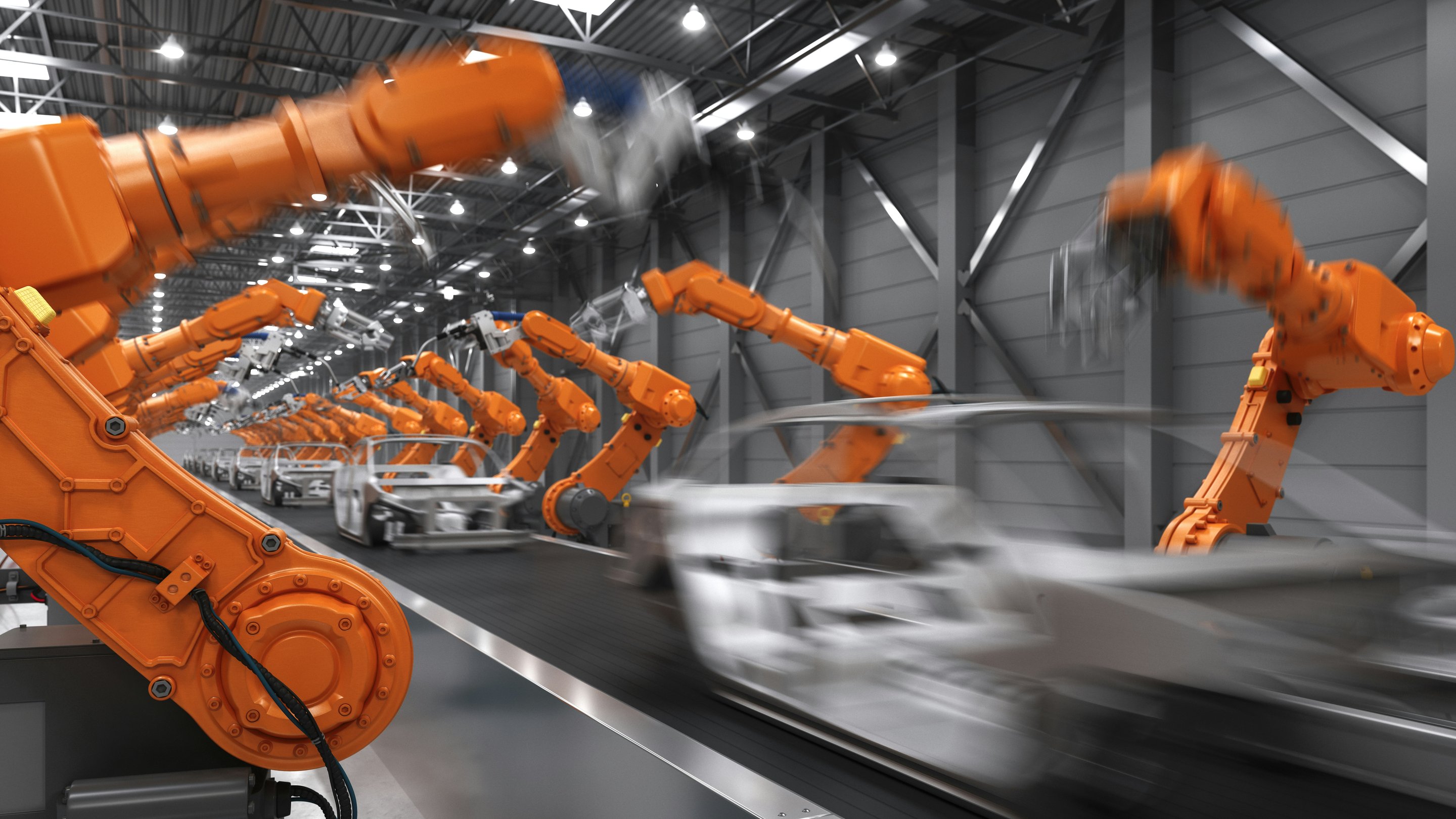
Automotive & Manufacturing

Logistics, production, vehicle – software at the pace of manufacturing

01Automotive & Manufacturing

Software for Vehicle, Plant and Supply Chain

In manufacturing, business applications and production are closely intertwined: logistics systems steer parts and vehicles through plants and supply chains, planning and quality applications accompany every production ramp-up, and software in the vehicle becomes part of the product. Many of these applications have grown over decades – on the mainframe, in SAP landscapes with custom ABAP extensions, or as custom software close to the plant and the vehicle.

Add short model cycles, production ramp-ups in several plants at once and supply chains whose parts and data flows run through many partners. Changes to logistics and planning applications therefore have to fit into the ongoing operation of the plants.
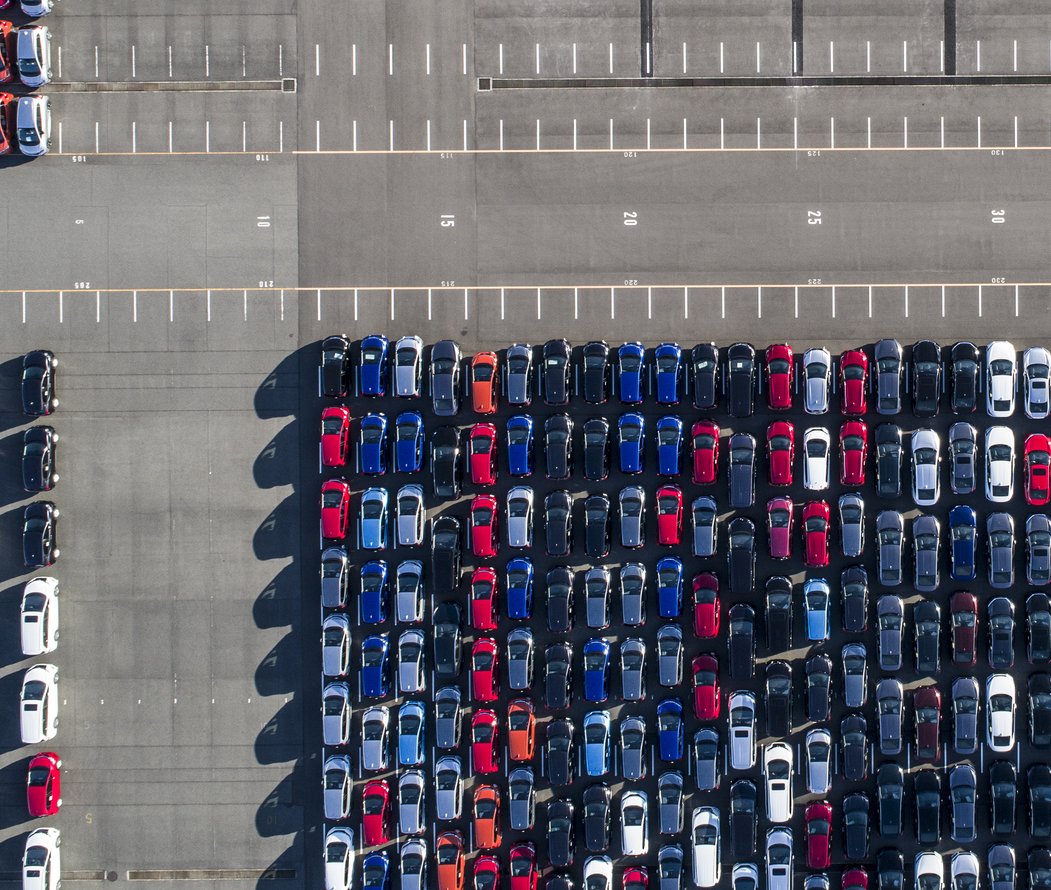
Software for Vehicle, Plant and Supply Chain
02Automotive & Manufacturing

What Manufacturers Are Working On

  1. 02.1

    The Path to SAP S/4HANA

    Mainstream maintenance for SAP ECC ends at the end of 2027, and with it comes the question of what happens to ABAP extensions grown over years: thousands of custom objects, business rules documented only in the code, and tightly coupled interfaces. Knowing these rules makes it possible to decide what moves into the standard, what remains as a lean extension and what can go – the basis for a clean core.

  2. 02.2

    AI from Pilot to Series Operation

    Many plants run AI pilots. For series operation in logistics, quality assurance and maintenance, AI needs reliable data from IT and production technology, clear approvals and applications it can be connected to.

  3. 02.3

    Software as Part of the Product

    With the software-defined vehicle, software becomes part of the product and its type approval: since July 2024, UN Regulations R155 and R156 have required a cybersecurity management system, implemented according to ISO/SAE 21434, and governed software update management for all newly registered vehicles. From February 2027, every traction battery needs a digital battery passport, the EU's first Digital Product Passport.

  4. 02.4

    Control over Production Data

    Production data and intellectual property are to stay under the company's own control, while applications work together across plants and partners. Edge computing and shared data spaces such as Catena-X provide a framework for this.

03Automotive & Manufacturing
The Application Landscape in Plant and Supply Chain

The Application Landscape in Plant and Supply Chain

  1. 03.1

    Logistics and Supply Chain

    Call-offs, delivery notes, container management and just-in-sequence control: applications that constantly exchange data with suppliers and plants, mostly via EDI under VDA and Odette standards, and in which every delay reaches the line.

  2. 03.2

    Production and Quality

    MES, ramp-up planning, inspection planning and traceability down to the vehicle identification number. Data from production technology – controllers, SCADA, test benches – flows into quality and planning applications and forms the basis for a digital twin.

  3. 03.3

    ERP and Planning

    SAP landscapes with custom extensions for materials planning, variant planning and prototype building, alongside custom applications, often on the mainframe, for tasks no standard covers.

  4. 03.4

    Vehicle and After Sales

    Software in the vehicle, updates in the field, diagnostics and workshop systems. Data from the vehicle reports quality and usage back to engineering and production.

Focus Areas for Automotive & Manufacturing

Companies that want AI to work across the whole business need an environment in which solutions are built agentically and AI contributes to planning, quality and logistics – AI Enablement sets it up together with their own teams.

  1. 01

    Renewing and Optimizing Applications

    Renewing grown applications during live operation and lowering their running costs – from SAP landscapes with custom ABAP extensions to custom software on the mainframe. AI-assisted analysis recovers the business rules; automated comparison tests safeguard the business behavior. One example: the logistics systems of a car maker on the mainframe, whose running costs were lowered.

  2. 02

    AI Solutions for Production and Supply Chain

    AI solutions that work on manufacturing data: quality inspection with image processing, predictive maintenance and supply chain analytics – from choosing the use case through production to monitoring the models.

  3. 03

    Plant and IT Integration

    Designing and building the data architecture between shop floor and enterprise applications: data pipelines from production, connection of MES and SCADA, integration layers and platforms for the digital twin – while production continues.

  4. 04

    Vehicle Software and Cybersecurity

    Software in and around the vehicle: architectures for over-the-air software updates, cybersecurity according to ISO/SAE 21434 and data models for the Digital Product Passport. Examples from practice: software for near-field communication, the vehicle bus and controls.

  5. 05

    Operations and Further Development

    Running manufacturing IT applications – ERP-related applications, production data platforms and AI applications – and developing them further in the same team, supported by agents.

  6. 06

    Assessing Applications and Portfolios

    Assessing mainframe, SAP and custom applications at code level: which are suited for AI agents and where renewal or optimization brings the greatest benefit. One example: at a German car maker, a first assessment became a standing service in which the group's applications were assessed over several years.

A specialist for business-critical applications since 2003 – now applying AI with exactly this knowledge.

  • 2003founded, owner-managed, independent
  • 200,000+person-days of project experience
  • 50 mlines of code in the largest systems
  • 100%computer scientists

More case examples

  • German car manufacturer

    Health Checks as a Standing Service: More Than 25 Applications Assessed

    A first health check became a standing service within the group. Over five years we analysed mainframe applications, quantified savings potential and supported its realisation. In 2008 alone, 1.5 million MIPS-hours of computing time were identified as potential and 263,000 of them saved.

    • 2006–2010
    • more than 25 applications
    • 263,000 MIPS-hours saved (2008)

    Application Assessment · Application Optimization

  • Automotive industry

    Software Close to the Vehicle: Near-Field Communication, Vehicle Bus, Controls

    Alongside business applications we have developed solutions for the vehicle itself: near-field communication (NFC) in the vehicle, multifunctional displays on the vehicle bus and the touch control of an operating element – down to device drivers and real-time operating systems.

    • NFC in the vehicle
    • CAN and LIN bus
    • Real-time operating system

    AI Business Solutions

All references
—Client voices

What Clients Say

In hindsight, these assumptions were confirmed by the fact that no supplier could even come close to itestra’s offer, and that we probably could not have found a better partner for implementing the project.

Project lead, German car manufacturerAutomotive & Manufacturing · 2012 · translated from GermanFrom the final report of a project that replaced a mainframe information tool – completed below budget.

With the measures you proposed, the runtime could then be reduced once more from 23 minutes to 3 minutes. […] For me, that made the whole undertaking a complete success.

IT manager, German car manufacturerAutomotive & Manufacturing · 2009 · translated from German

Automotive Experts

Personal contacts at the intersection of IT and production.

World-class computer science for tomorrow's digital business